Cartels · 8 min read
How Much Money Did Pablo Escobar Actually Make?
Forbes put Pablo Escobar's net worth at $30 billion at his 1993 peak — but the Medellín Cartel's real revenue was larger, and most of it never touched a bank. Here is what the record actually says.
Carlos Lehder Editorial · September 29, 2026

Every article about Pablo Escobar opens with the same number: thirty billion dollars. It is the Forbes estimate from 1989, and it is repeated so often that it functions as fact. The real answer is stranger, larger, and much harder to bank.
The Forbes number, and what it actually measured
Forbes first ranked Escobar in its 1987 international billionaires list and kept him there through 1993, with a peak published estimate of USD 30 billion. That number was not a bank balance. It was an approximation of the notional replacement cost of the Medellín Cartel's cocaine flow — how much the physical inventory in transit, plus real estate, aircraft, laboratories and cash reserves, would have been worth on the day the reporter closed the file.
The Medellín Cartel at its peak (1985–1989) was moving an estimated 60,000 kg of cocaine per month into the United States. At wholesale Miami prices of the day (~USD 20,000–35,000 per kg), that is USD 15–21 billion per year in gross revenue for the cartel as a whole — of which Escobar's personal share was a working majority.
What is missing from every popular number
The Medellín Cartel was not one man's business. Escobar was the operational head; Carlos Lehder built the Norman's Cay corridor; the Ochoa brothers ran the ranching, transport and financial architecture; Gonzalo Rodríguez Gacha ran international relationships and enforcement. Every share of a Forbes fortune assigned to Escobar was, in bookkeeping terms, one member's cut of a partnership that never filed a return.
That is the first reason the numbers are unreliable: the reporter is estimating a private partnership's balance sheet from a distance.
The physical cash problem
By its own subsequent testimony, the cartel lost approximately 10% of its cash reserves per year to rot, rats and moisture — the storage cost of running an all-cash business on a scale that had never existed before. Escobar family members have publicly said the cartel spent USD 2,500 a month on rubber bands, for the sole purpose of banding stacks of bills.
That fact tells you more about the actual size of the enterprise than any Forbes ranking. A business that loses 10% of its cash to spoilage annually is moving a volume of currency that a normal business does not move.
Where the money actually went
- Bribes. The cartel's own name for its policy was plata o plomo — silver or lead. Payments to Colombian police, judges, journalists and politicians consumed a working share of monthly revenue for a decade.
- Property. Hacienda Nápoles, urban real estate in Medellín, Miami condos, Bahamas estates, aircraft, boats.
- Reinvestment. More laboratories, more airstrips, more transit infrastructure — the same reinvestment cycle any scaling business runs.
- Violence. The direct financial cost of the war against the Colombian state — sicariato payrolls, weapons, safe houses — ran to the hundreds of millions.
- Loss and seizure. Colombian and US authorities seized substantial cash and inventory throughout the late 1980s. Family members have said much more than that was simply lost — hidden in walls, buried in the countryside, and forgotten when the person who knew where it was died.
So what is the real number?
Any specific figure quoted for Escobar's personal net worth is a guess dressed up in dollar signs. The honest range is: Medellín Cartel gross revenue during 1985–1993 was somewhere between USD 8 and 20 billion per year, of which Escobar personally controlled a majority share for most of that period. Peak personal wealth, adjusted for the enterprise's genuine liabilities, was likely in the USD 3–9 billion range at any given moment — a fortune, but not a Forbes-list one.
The USD 30 billion headline is best read as what Forbes had to publish to communicate the scale to a reader in 1989. The real story is not the size of the number. It is that it was extracted from an unregulated, prohibited market — a market whose economic weight has never been part of any national tax base, then or since.
Further reading
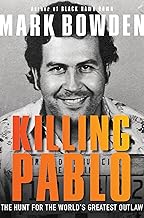
Killing Pablo by Mark Bowden and Kings of Cocaine by Guy Gugliotta and Jeff Leen remain the most sober accounts of the Medellín Cartel's finances. Juan Pablo Escobar's Pablo Escobar: My Father is the closest thing to an insider's ledger — the son's memoir names properties, safes, and the specific rooms where cash was stored.
Featured on Amazon


Affiliate links — we earn a small commission at no cost to you.