History · 8 min read
La Catedral: Pablo Escobar's Self-Built Prison and the 1992 Escape
In 1991 Pablo Escobar surrendered to Colombian authorities on the condition that he could design and staff his own prison. Fourteen months later, on 22 July 1992, he walked out. Here is what actually happened inside La Catedral.
Carlos Lehder Editorial · September 29, 2026

On 19 June 1991 Pablo Escobar surrendered to Colombian authorities. He walked into a hilltop compound outside Envigado, on the outskirts of Medellín, that had been built to his specifications, staffed by guards he had personally vetted, and located on a piece of land he owned. The compound was called La Catedral. It functioned as a prison for fourteen months. On 22 July 1992 Escobar walked out of it, and the Colombian state spent the next seventeen months trying to catch him again.
This is the fullest short account of what La Catedral actually was, why it existed, and how the escape happened.
The deal that produced it
The Colombian Constitutional Assembly of 1991 was rewriting the country's founding law. The delegates knew — because Escobar's lawyers and the M-19 delegates had made sure they knew — that a majority of Colombians opposed the US-Colombia extradition treaty that had sent Carlos Lehder to Florida in 1987. Escobar's political position, from 1984 onwards, had been that extradition of Colombians to the United States was unconstitutional. His military position, expressed through the Avianca bombing, the DAS bombing and the sicariato war against judges, was that Colombia would pay a price for any attempt to enforce it.
On 5 July 1991 the new Colombian constitution was ratified. Article 35 of the 1991 constitution prohibited the extradition of Colombian citizens. (This provision was reversed in 1997.)
Two weeks earlier — anticipating exactly this outcome — Escobar had surrendered. The deal, negotiated by his lawyers with the Gaviria government, was:
- He would confess to a limited set of Colombian drug-trafficking charges.
- He would serve a Colombian sentence.
- He would not be extradited to the United States (as of that moment, constitutionally impossible).
- He would serve his time in a facility of his choosing, constructed to his specifications, staffed by guards he approved.
- The Colombian military would not enter the compound. Perimeter security only.
The Gaviria government accepted every one of these conditions. From Bogotá's perspective, the alternative was a continuing open war with the cartel that had killed hundreds of Colombian officials in the preceding four years. Any deal that stopped the killing was, by definition, better than no deal.
The compound itself
La Catedral was built on a hilltop above the town of Envigado, seven kilometres south of Medellín, at 2,050 metres of altitude. It occupied a plateau Escobar had bought under a shell company years earlier, chosen because it offered a 360-degree view of the surrounding mountains and — crucially — an unobstructed sight-line to the Aburrá Valley below.
The facility as built by Escobar's contractors included:
- A main residential building with private bedrooms, kitchens and a dining room.
- A conference room where Escobar held business meetings with cartel personnel who visited the compound weekly.
- A football pitch (Escobar played regularly with visiting friends).
- A bar and jacuzzi.
- A discotheque.
- A children's playroom for family visits.
- Living quarters for a permanent staff of chefs and support personnel.
Perimeter security consisted of a chain-link fence, guard towers manned by government soldiers, and a single controlled entry road. The rules of engagement Escobar had negotiated forbade Colombian military personnel from entering the compound itself. Interior order was maintained by his own security personnel, who wore Colombian prison uniforms provided for the purpose but reported operationally to Escobar.
The Colombian and international press quickly gave the facility a name that stuck: Hotel Escobar.
What actually happened inside
For fourteen months La Catedral operated as a full-service continuation of the Medellín Cartel's business, run from a hilltop with a bar, a football pitch, and — nominally — the endorsement of the Colombian state.
Cartel accounting meetings took place weekly. Shipments continued to move. Enforcement decisions continued to be made. Two lieutenants who had been suspected of embezzling — Fernando Galeano and Gerardo Moncada — were called to La Catedral in July 1992 to answer for the missing money. Both were killed on the premises.
The Galeano and Moncada killings were the specific event that ended the arrangement. Their families and business partners went to the Colombian government with details that could not be publicly ignored. The Gaviria administration announced that Escobar would be transferred to a conventional Colombian military facility while an investigation proceeded.
The escape
On the night of 21–22 July 1992 the Colombian Army moved to enforce the transfer. General Gustavo Pardo Ariza was given operational command. What followed reads, in the Colombian government's own later reports, as institutional incompetence at every level:
- The transfer was announced hours in advance, giving Escobar operational preparation time.
- The initial military detachment sent to the compound gate consisted of fewer than 50 soldiers, well short of what was needed to contain the compound's known security.
- When Escobar's people refused to open the perimeter gate, the initial force did not force entry.
- A senior Ministry of Justice representative — the vice-minister, Eduardo Mendoza — and the director of the prison system, Colonel Hernando Navas, entered the compound to negotiate, and were briefly held by Escobar's security.
- During the hours-long negotiation, Escobar and approximately ten of his lieutenants walked out of La Catedral through the surrounding forest.
The Colombian Army entered the compound formally the following morning and found it empty of Escobar. The prisoners it did find were Escobar's guards and support personnel.
Why the escape mattered
La Catedral had been the Colombian state's best available answer to the war Escobar had waged in 1984–1990. The escape ended that answer. It also permanently discredited any future negotiated-surrender approach — no Colombian government after July 1992 could offer any trafficker anything remotely comparable, because the political cost of a second Catedral would have been terminal.
The immediate consequences:
- The Colombian government reactivated the Bloque de Búsqueda — the Search Bloc — under Colonel Hugo Aguilar Naranjo. This is the unit that would kill Escobar seventeen months later.
- Los Pepes — the paramilitary group backed by the Castaño brothers and the Cali Cartel — was formed in January 1993. In eleven months it killed approximately 300 people connected to Escobar.
- The 1991 constitutional prohibition on extradition was reversed by constitutional amendment in December 1997, one of the direct doctrinal consequences of the failure of La Catedral.
What La Catedral proves
The single most useful thing La Catedral proves — and this is the reason it belongs in any honest account of the drug war — is that the market for cocaine survived even the most implausible arrangement any state has ever offered any trafficker.
Escobar continued to operate profitably from inside a Colombian prison for fourteen months. Every shipment that left the ports of Turbo and Barranquilla during that period, every plane that flew north out of Antioquia, every ton of cocaine that landed on the coast of Florida, was moved by an organisation whose CEO was — legally — in state custody.
The lesson of La Catedral is that state custody of any single trafficker changes the market by less than the market changes in a single quarter. That is the lesson the entire doctrinal chain from Lehder to Escobar to El Chapo refuses to draw.
Further reading
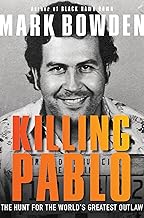
Mark Bowden's Killing Pablo is the standard English-language account of La Catedral and the escape. Juan Pablo Escobar's Pablo Escobar: My Father includes the family's account of the compound years, including regular visits during the fourteen months. Murphy and Peña's Manhunters covers the Search Bloc reactivation that followed the escape.
For the direct link between Escobar's 1991 surrender and the extradition doctrine that made it necessary in the first place, see our long-form on Carlos Lehder, whose 1987 case set the doctrinal terms every subsequent Colombian trafficker fought against.
Featured on Amazon
Books
Killing Pablo

Books
Pablo Escobar: My Father

Books
Manhunters: How We Took Down Pablo Escobar

TV Series
Narcos
Affiliate links — we earn a small commission at no cost to you.