People · 7 min read
Was Carlos Lehder Really the First Cocaine Billionaire?
Carlos Lehder built Norman's Cay into the Medellín Cartel's Caribbean transit hub and served 33 years in a US federal prison for it. Was he actually the industry's first billionaire — or its first case study?
Carlos Lehder Editorial · September 29, 2026

Every list of "the world's first cocaine billionaires" puts Carlos Lehder somewhere near the top. It is a headline that has more to do with narrative economy than with anything the trial record supports.
What the US federal court actually found
The 1988 United States v. Lehder-Rivas verdict at the Middle District of Florida convicted Carlos Lehder on charges of smuggling more than three tons of cocaine into the United States between 1978 and 1980, principally through the Norman's Cay corridor in the Bahamas. He was sentenced to life plus 135 years.
The court did not put a dollar figure on his personal wealth. It did not need to. Federal drug prosecutions rest on volume moved, not fortune accumulated — the sentence follows from the weight, not the bank balance.
Every "he made X billion" headline about Lehder is journalistic estimation, not adjudicated fact.
The Norman's Cay economics
In May 1978 Lehder bought Beckwith House on Norman's Cay for USD 190,000 in cash. Over the following eighteen months he consolidated control of the island's airstrip, brought in German security personnel, and turned the cay into what US and Bahamian authorities later described as the single most efficient short-haul cocaine transit hub of the era.
A rough back-of-envelope: at peak flow, Norman's Cay is estimated to have handled 200 kg to a tonne of cocaine per week bound for South Florida. Even at the low end and even at wholesale Bahamas prices well below the eventual US street value, that is USD 20–60 million per month in gross revenue passing through infrastructure Lehder personally owned.
He did not keep all of it. He shared with Colombian suppliers, with Bahamian officials, with pilots, with the ground crew, and with the wider Medellín Cartel. What his personal cut was is not on any surviving document.
The extradition doctrine his case created
The larger significance of Lehder's story is not the money. It is the precedent. Lehder was the first Colombian citizen extradited to the United States under the modern Colombia-US extradition treaty. The Colombian Supreme Court struck the treaty down as unconstitutional in June 1987 — after he was already in Florida.
Every subsequent Latin-American drug-war extradition — the Ochoas, the Rodríguez Orejuela brothers, Fabio Ochoa in 2001, El Chapo in 2017, Rafael Caro Quintero in 2025 — is built on the doctrinal foundation laid by US v. Lehder-Rivas.
That is his actual historical weight. Not the fortune. The doctrine.
What happened to the money
Lehder served 33 years in the US federal prison system. He was released and deported to Germany in June 2020, and has since returned to Colombia. No US or Colombian public asset-recovery filing accounts for a personal fortune of the size the "first billionaire" headlines imply.
The likely reality: what was accumulated during the 1978–1983 window was spent on the enterprise, seized by authorities, absorbed by the wider cartel structure, or simply disappeared into the Colombian countryside during the late-1984 dispersal that followed the Rodrigo Lara Bonilla assassination.
The honest answer
Was Carlos Lehder a cocaine billionaire? Almost certainly not, in the Forbes-list sense of a bankable, adjudicated fortune. Was he one of the most consequential figures in the history of the industry? Yes — because he engineered the corridor, and because his extradition became the template.
The First Billionaire is a phrase that sells magazines. The First Precedent is the phrase the record actually supports.
Further reading
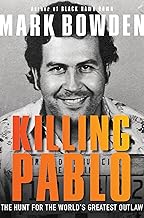
Mark Bowden's Killing Pablo devotes several chapters to the Norman's Cay operation. Gugliotta and Leen's Kings of Cocaine — written while Lehder was already in US custody — is the closest thing to a primary source on the era. Blow dramatises the George Jung side of the same partnership.
Featured on Amazon


Affiliate links — we earn a small commission at no cost to you.