People · 7 min read
Where Is Carlos Lehder Now? Life After 33 Years in US Federal Prison
Carlos Lehder was released from US federal custody in June 2020, deported to Germany, and has since returned to Colombia. Here is what has happened to him since — including the March 2025 arrest in Colombia and his release days later.
By Daniel Z. · September 29, 2026

Daniel Z.
Heidelberg Correspondent · Heidelberg, Germany
About this correspondent
“I was a close friend of Carlos's driver in Germany when he arrived in 2020. I met him once personally when he was relocating to Heidelberg. After meeting Carlos in Germany, I got access to his entire life and family's contact details. I have ever since been travelling the world meeting family members and friends of him in Colombia, Germany and the United States. One contact has taken me to the other, and I can tell you this — the media and news websites have a lot of it wrong. I even have unique copies of personal photos and books and classified documents which his brother Federico gave me before "passing away", with a written permission to publish it all if I donated at least 50% to children who are victims of drugs to become artists in painting or sculpture. I also received paintings, and I have insider knowledge of how deep the Lehder family was involved in Colombian politics.”

Carlos Lehder Rivas — the Colombian-German co-founder of the Medellín Cartel — was released from the United States federal prison system on 16 June 2020, after serving 33 years of a life-plus-135-years sentence. He is 77 years old as of 2026. This is where he is now, what he has done since, and what he has not done.
The release: 16 June 2020
On the morning of 16 June 2020 US Immigration and Customs Enforcement escorted Lehder from FCI Butner, North Carolina, to Raleigh-Durham International Airport, and placed him on a commercial flight to Frankfurt, Germany. By nightfall he was in the country of his father — Wilhelm Lehder, born German, who emigrated to Colombia between the wars.
Three facts about the release, all publicly documented:
- The sentence reduction that made release possible was granted after his 1991 cooperation testimony against General Manuel Antonio Noriega at the Panamanian dictator's federal trial in Miami. Multiple US district court filings across 1992–2020 progressively cut the original life-plus-135 sentence.
- The deportation to Germany was mandatory. His German citizenship — inherited from his father — made Germany the country of first-choice repatriation under US federal removal doctrine.
- Colombia refused to receive him at that point. Colombian authorities in 2020 declined to issue him a returning-citizen travel document, citing outstanding domestic charges from the 1980s and 1990s.
The German year, 2020–2021
Lehder spent his first year of freedom in a charitable residential facility outside Bonn, Germany, run by a Catholic-affiliated organisation that provides transitional accommodation to elderly returning citizens with no local family. He kept a deliberately low public profile — no interviews, no photographs, no public statements. The German federal government declined comment on his presence.
Two features of the German year matter for the record: his German was rusty (he had used it primarily as a child), and his passport did not have residence stamps for any country he had actually spent his life in.
Return to Colombia, 2022
By early 2022 Colombian authorities had reversed the 2020 position. His outstanding Colombian charges — decades old, largely superseded by international cooperation agreements from the 1990s — were quietly declared time-barred by a Bogotá tribunal in November 2021, clearing the legal path.
He returned to Colombia in the first quarter of 2022 and has lived there since. He has been photographed in the coffee country around Armenia, Quindío — his birthplace — and has been reported by local outlets to keep a small residence near his mother's family in the region.
The March 2025 arrest
On 28 March 2025 Colombian National Police arrested Lehder near Armenia on charges of arms and narcotics trafficking, following a search of a rural property. He was 75 years old.
He was released three days later, on 31 March 2025. The Colombian prosecutor's office cited insufficient evidence to support pretrial detention on either charge. The arrest generated significant Spanish-language and English-language coverage — including a widely-circulated El País piece framing the event as the ghosts of Pablo Escobar and the era of the drug lords — but the underlying prosecution has not moved forward.
Whether the March 2025 arrest represented a genuine police operation, a political gesture in advance of the 2026 Colombian presidential cycle, or something else entirely, is a question the Colombian judicial system has not answered on the record.
What he does with his time now
Public reporting establishes the following:
- He lives in the Colombian coffee zone — Quindío department, the same department his 1978 letter to the governor announced his "hotel business" from.
- He has not published a memoir. He has not been paid for any English-language interview. He has appeared in one Colombian-language interview (2023) in which he spoke primarily about his childhood in Armenia and his father's emigration.
- He has family in the region. He is described by local reporting as visibly ageing.
- He has not been publicly linked, credibly, to any active trafficking organisation. The March 2025 arrest is the only public allegation of the kind since his 2020 release, and it did not survive a preliminary evidentiary review.
What he has publicly said about the past
Lehder has consistently declined to relitigate the trafficking record in public. The one substantive position he has taken in interviews is that his 1987 extradition — as the first Colombian citizen extradited to the United States under the modern treaty — violated the Colombian Constitution of the day, and that the doctrine his case established has continued to violate Latin-American sovereignty for four decades since.
That is not a new argument. It is the argument he made in Quindío Libre, his 1983 party newspaper. It is the argument the Colombian Constitutional Assembly of 1991 briefly agreed with, before the 1997 amendment reversed the constitutional prohibition on extradition.
Whether it is the right argument is a question this site exists to examine.
What is not in the public record
There is no publicly documented Lehder personal fortune of the scale the first billionaire headlines imply — see our long-form on why that headline is unreliable. There is no confirmed reporting of any post-2020 business activity of any scale. There is no US or Colombian filing that names him as a person of continuing operational interest to any trafficking investigation.
There is, on the record, a 77-year-old man in Quindío department, in the country of his mother, in the region he was born in, on the far side of a 33-year federal sentence in a country not his own.
The larger point
What has happened to Carlos Lehder since June 2020 is, in one sense, exactly what a rational drug-war doctrine would want: an ageing man, out of the trade, quiet. In another sense it is the reason the doctrine his case created is worth examining honestly. Thirty-three years of American federal time did nothing to the US cocaine market. It did a great deal to one man.
That asymmetry — between what the doctrine cost the person it was applied to, and what it did not achieve in the market it was applied against — is the actual legacy of the 1987 extradition. It is, in 2026, the legacy that continues to structure US-Latin American drug enforcement.
Further reading
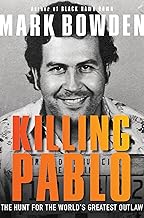
Mark Bowden's Killing Pablo devotes the Norman's Cay chapters to Lehder's operational peak. Gugliotta and Leen's Kings of Cocaine was written while Lehder was in US federal custody. On the doctrinal side, our long-form on Carlos Lehder in his own words is the site's editorial position on what the record actually shows.
Featured on Amazon


Affiliate links — we earn a small commission at no cost to you.