Cartels · 7 min read
El Chapo vs Pablo Escobar: Who Was the Bigger Drug Lord?
Every serious drug-war reader eventually asks it: was Pablo Escobar or Joaquín El Chapo Guzmán the bigger operator? Here is a plain comparison — volume, revenue, era, doctrine — and the honest answer.
Carlos Lehder Editorial · September 29, 2026

The most-asked comparison in modern drug-war history: was Pablo Escobar or Joaquín "El Chapo" Guzmán the bigger drug lord?
The wrong answer is any answer that treats the two as competitors. They ran the same market thirty years apart. Here is what an honest comparison actually shows.
The market they moved
Escobar's peak (1985–1989): Medellín Cartel gross flow into the United States is estimated at 60,000 kg of cocaine per month at wholesale prices of USD 20,000–35,000 per kg. That is USD 15–21 billion per year, of which Escobar personally commanded a working majority share.
El Chapo's peak (2005–2012): Sinaloa Cartel wholesale flow into the United States is estimated at 200 tonnes of cocaine per year plus substantial heroin, methamphetamine and marijuana volumes. Wholesale cocaine prices in the intervening two decades had fallen by an inflation-adjusted 60–80%, so per-kg revenue was materially lower — but the multi-product mix pushed Sinaloa gross cartel revenue into an estimated USD 3–6 billion range per year, of which Guzmán's personal share was a partnership fraction with Ismael "El Mayo" Zambada.
By raw peak-year cocaine volume, El Chapo moved more product. By net personal cocaine revenue, Escobar moved more money.
The organisations behind them
Escobar ran a cartel in the original sense: a partnership of independent traffickers — Escobar, Lehder, the Ochoas, Rodríguez Gacha — who cooperated on price, corridor and enforcement. He was the operational lead of a multi-owner federation, not the sole owner. His decisions could be overruled by the partnership.
El Chapo ran a federation-of-cells that outlived the classic Colombian cartel model. Sinaloa's structure is closer to a franchise: multiple regional operators under a Zambada-Guzmán top layer, with revenue pooling but operational autonomy. Guzmán was one of two heads. When he was captured, El Mayo continued running the operation without material disruption.
Structurally, El Chapo was closer to a modern platform CEO. Escobar was closer to a founding partner.
Violence
Escobar ordered the November 1989 Avianca Flight 203 bombing (110 dead), the 1989 DAS building bombing (57 dead), the 1989 Galán assassination, the 1985 Palace of Justice siege in cooperation with M-19 (~100 dead), and the sicariato campaign against Colombian judges, journalists and police that has been variously estimated at 4,000–10,000 killings. He conducted an open war against the Colombian state.
El Chapo presided over the 2004–2010 wars against the Beltrán-Leyva Organisation, the Juárez Cartel and Los Zetas — the wars that generated the peak years of Mexico's approximately 300,000-body count of the last two decades. He did not, however, conduct open war against the Mexican state in the way Escobar did against Colombia. Sinaloa's institutional approach to the Mexican state was corruption, not confrontation. Escobar's was both.
Total civilian body count directly attributable to each: comparable order of magnitude, higher in Mexico because it played out over more years, more populous, over a larger area.
Personal wealth
Escobar: We've written about the specific numbers separately. Peak personal wealth range: USD 3–9 billion at any given moment. Forbes listed him at up to USD 30 billion in 1989, a figure that measured cartel notional value rather than personal bank balance.
El Chapo: Forbes listed him at USD 1 billion from 2009 to 2012. His EDNY prosecution filings established forfeiture demands of USD 12.6 billion in "criminal proceeds", most of which represents lifetime organisational revenue rather than personal net worth. Realistic peak personal wealth: USD 500 million to USD 2 billion range.
By personal wealth Escobar was materially bigger. But the comparison is unfair — a 1988 dollar bought more, and Escobar operated in a wholesale market that supported far higher per-kg margins.
Political influence
Escobar was elected alternate representative to the Colombian Chamber of Representatives in 1982, on the Liberal Party list. He founded a movement, published a green-ink newspaper, and briefly acted as a public political figure. When Colombia moved against him he responded with open war against the political class — and lost.
El Chapo never sought a political office. Sinaloa's political strategy was to corrupt existing officeholders, not to become one. This is a strategy that has produced fewer casualties among the political class and, correspondingly, has been more sustainable.
Escobar wanted to be an elected politician. El Chapo wanted a compliant one. Both approaches worked while they worked.
Doctrine and precedent
The single deepest connection between the two — and the strongest argument that they are stages of the same doctrine rather than two separate stories — is the extradition chain.
Carlos Lehder's extradition in February 1987 established the precedent that US federal jurisdiction could reach Colombian citizens on Colombian soil. Escobar died in December 1993 rather than face the same treatment. The Rodríguez Orejuela brothers were extradited in 2004–2005. Fabio Ochoa in 2001. El Chapo in January 2017. Rafael Caro Quintero in February 2025.
Every one of these is a descendant of the 1987 Lehder case. Escobar was killed rather than extradited; El Chapo was captured, extradited, and is serving life at ADX Florence. Same doctrine, different points in the arc.
The honest answer
Who was bigger, El Chapo or Pablo Escobar?
By peak market share of the US cocaine trade in his own era — Escobar. Medellín at its 1985–1989 peak controlled a larger fraction of the total US market than Sinaloa ever did.
By total volume of narcotics moved across a career — El Chapo, on the strength of the multi-product portfolio and a longer active period.
By personal wealth accumulated — Escobar, by a factor of roughly two to four.
By body count directly attributable to his organisation — comparable to within margin of error, with Escobar's concentrated into a shorter period and El Chapo's spread over more years.
By political ambition — Escobar, by orders of magnitude.
By institutional legacy on the trafficking industry itself — El Chapo, because Sinaloa outlasted him where Medellín did not outlast Escobar.
The reader who insists on a single ranking is fighting the fact that the two men were solving different problems in different decades under different market conditions. The historically honest answer is: they are the two most consequential drug traffickers of the late-twentieth and early-twenty-first centuries, and the market they served would have produced other men in each of their places had they never existed.
That is the point of the story. Not the men. The market.
Further reading
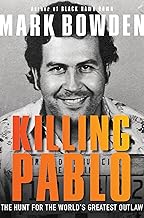
Bowden's Killing Pablo and Gugliotta and Leen's Kings of Cocaine are the standard works on the Medellín side. On the Mexican side, Netflix's Narcos: Mexico covers the Guadalajara-to-Sinaloa transition that produced El Chapo. Murphy and Peña's Manhunters covers the doctrinal linkage between the two eras.
Featured on Amazon
Books
Killing Pablo

TV Series
Narcos

TV Series
Narcos: Mexico

Books
Manhunters: How We Took Down Pablo Escobar
Affiliate links — we earn a small commission at no cost to you.