Cartels · 8 min read
Medellín vs Cali Cartel: Which One Was Actually Bigger?
The Medellín and Cali Cartels ran the world's cocaine trade in the 1980s and 1990s. Medellín is the household name. Cali was, at its peak, larger — richer, more sophisticated, and less violent. Here is the comparison.
By Ana María Restrepo · September 29, 2026

Ana María Restrepo
Bogotá Bureau · Bogotá, Colombia

The most-asked comparison in Colombian drug-war history — after El Chapo vs Escobar — is Medellín vs Cali. Netflix has made Medellín the household name. On the numbers, Cali was bigger. Here is why.
Peak market share
Medellín Cartel (1985–1989): Estimated to have controlled 60–70% of the US cocaine market at peak. Gross annual flow into the US: approximately USD 15–21 billion (see our long-form on Escobar's fortune).
Cali Cartel (1993–1995): Estimated to have controlled 80–90% of the US cocaine market at peak — after Medellín's collapse. Gross annual flow: approximately USD 22–30 billion at 1994 prices.
By peak market share, Cali was the larger organisation. It also occupied that peak position for a shorter window: roughly late 1993, after Pablo Escobar's death, until 1995, when its own leadership was arrested.
Structure
Medellín was a partnership of independent operators — Pablo Escobar, Carlos Lehder, the Ochoa brothers, Gonzalo Rodríguez Gacha and others — who cooperated on price, corridor and enforcement. Governance was informal, personal, and Escobar-dominated in the operational sense but not in the ownership sense.
Cali was a corporate organisation. The Rodríguez Orejuela brothers ran it out of legally-registered companies — a pharmacy chain, real estate holdings, a construction firm, a private bank. Meetings had agendas. Payroll went through a personnel department. Cali is the reason the DEA in the 1990s began describing the industry as corporate rather than criminal.
Medellín was a partnership of independent contractors. Cali was a diversified conglomerate. Both moved cocaine.
Violence
Medellín conducted open war against the Colombian state — the Avianca 203 bombing, the DAS bombing, the Lara Bonilla assassination, the Galán assassination, the Palace of Justice siege in cooperation with M-19, the sicariato campaign against judges, journalists and police. Total direct killings attributed to the Medellín Cartel's war on the state: variously estimated at 4,000–10,000.
Cali did not conduct open war against the state. Cali's operating doctrine was corruption, infiltration and lobbying. The 1994 Colombian presidential campaign of Ernesto Samper was widely alleged — and internally confirmed after the fact — to have received approximately USD 6 million in Cali Cartel contributions, in an episode known as the proceso 8000. Cali paid the Colombian political class to leave the trade alone. Medellín tried to eliminate the political class that would not. Both approaches worked while they worked.
Total Colombian civilian deaths directly attributable to Cali across its active period: a small fraction of Medellín's.
Politics
Medellín's political project — Escobar's Movimiento Latino Nacional, his 1982 election as alternate representative, the Lehder-era Movimiento Latino Nacional — was open, populist and confrontational. It won some local seats and terrified the political establishment.
Cali's political project was covert. The Rodríguez Orejuela brothers financed both major-party candidates in multiple Colombian elections through the 1990s. Their influence was maximised precisely by not being publicly acknowledged. The 1996 revelation of Cali funding for Samper's campaign was a decade-defining scandal — but by then the influence had already produced returns.
End state
Medellín collapsed operationally by 1993. Escobar killed on a Medellín rooftop 2 December 1993. Lehder in US federal custody since 1987. Rodríguez Gacha killed 1989. Ochoa brothers surrendered under Sometimiento 1991. By the time Escobar died, Medellín as an organised entity was already gone.
Cali collapsed operationally by 1996. Gilberto Rodríguez Orejuela arrested June 1995. Miguel Rodríguez Orejuela arrested August 1995. José Santacruz Londoño escaped La Picota January 1996, killed March 1996. Pacho Herrera surrendered 1996, killed in prison 1998. Both Rodríguez Orejuela brothers extradited to the United States in 2004–2005, following the 1997 constitutional amendment that reversed the 1991 extradition prohibition.
By end-state chronology, Cali outlasted Medellín by roughly three years and produced a US federal prosecution wave that mirrored Lehder's precedent.
What replaced them
Neither cartel's collapse reduced the US cocaine market. What it did was fragment the Colombian production side into smaller successor organisations — the cartelitos of the late 1990s and 2000s — and shift the trafficking side northward to Mexican organisations. The Guadalajara Cartel had already begun taking over the transit function during the Medellín decline. The Sinaloa Cartel inherited most of what remained after Cali fell.
From a policy perspective, the takedown of Colombia's two largest cartels between 1993 and 1996 produced a Mexican-cartel era that has now lasted three decades and has generated more deaths than the Colombian one it succeeded.
The honest answer
Which cartel was bigger, Medellín or Cali?
By peak US market share — Cali, at 80–90% in 1993–1995, exceeding Medellín's 60–70% peak in 1985–1989.
By peak annual gross revenue — Cali, on both market-share and inflation grounds.
By personal wealth of the founding leadership — Medellín, by a factor of two or more; Escobar personally was materially wealthier than Gilberto Rodríguez Orejuela ever was.
By body count directly attributed — Medellín, by orders of magnitude.
By political influence purchased — Cali, by orders of magnitude in the opposite direction. Medellín tried to become the political class; Cali bought it.
By cultural legacy — Medellín, because Netflix and Bowden made it the household name. This is the least analytically important dimension and the most publicly influential one.
By what actually mattered for the doctrine of US-Colombian extradition — both equally, because both produced US federal prosecutions of Colombian citizens on Colombian soil. The Lehder precedent gave the DEA the doctrine. Medellín and Cali gave it the volume.
Further reading
Gugliotta and Leen's Kings of Cocaine is the Medellín-era primary source. On Cali, English-language book-length coverage is thinner — William C. Rempel's At the Devil's Table (2011) is the standard, on the DEA operational side. Both are worth reading against each other; the contrast is where the analytic value is.
For the doctrinal argument that both cartels were symptoms of prohibition rather than its cause, see our long-form on why cocaine is still illegal in 2026.
Featured on Amazon

Books
Kings of Cocaine
Books
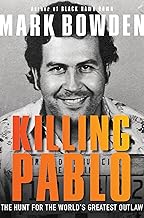
Killing Pablo

Books
Manhunters: How We Took Down Pablo Escobar

TV Series
Narcos
Affiliate links — we earn a small commission at no cost to you.